
Custom LED Strip Lights for Repeatable OEM Projects
Plan custom LED strip lights for furniture, retail fixtures, architectural details, and equipment integration. As a custom LED strip lights manufacturer, VST connects run…
View detailsFlexible Lighting for Product Assemblies
VST develops custom LED strip lights for cabinet channels, display edges, and equipment housings. As a custom LED strip light manufacturer, we bring circuit sections, connectors, and the installed light effect into one sample plan. Start with your application and get help identifying the decisions that still need attention.
Describe the application and approximate run lengths. Photos or a rough layout are enough to begin discussing undecided requirements.
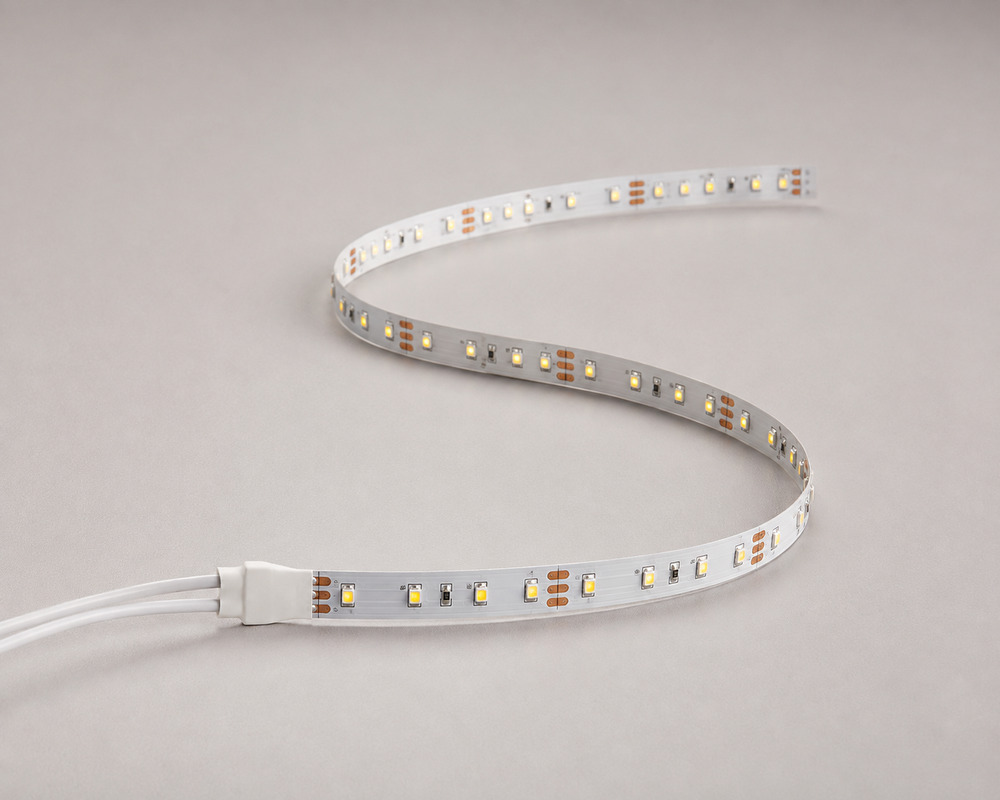
In a narrow channel, connector clearance may control the fit. Across repeated shelves, joins and feeds affect the visible line. For equipment housings, custom LED strip lights must also leave room for wiring and service access.
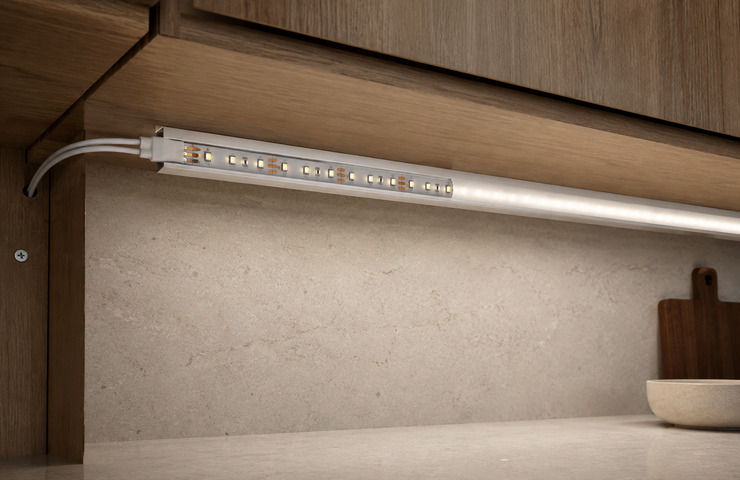
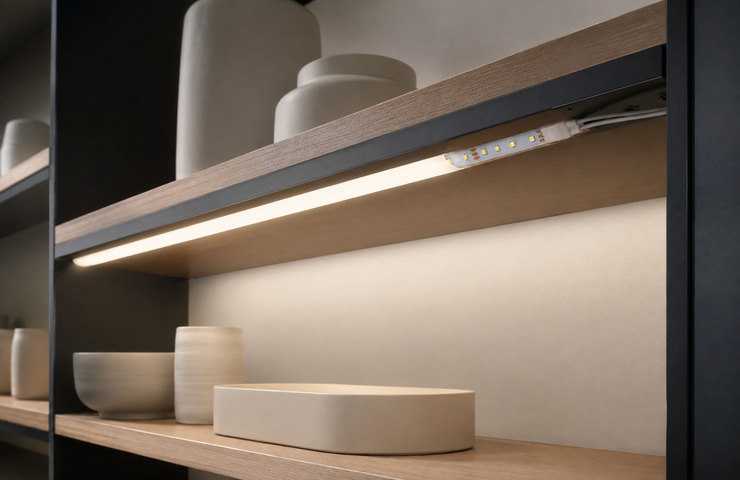
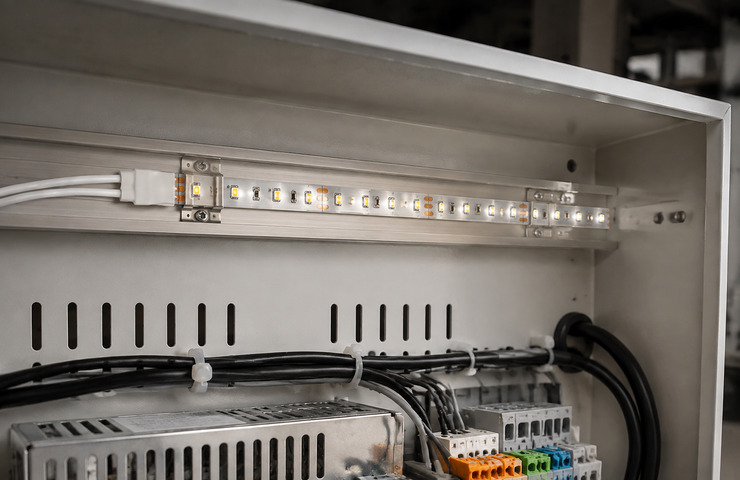
Purchasing risk: Cutting at the wrong position can produce an unusable section or dark gap.
Confirm: Required active lengths and permitted join positions.
VST solution direction: Match the section plan to workable circuit segmentation before defining the delivery format.
Purchasing risk: A long power path can undermine the intended lighting effect.
VST solution direction: Evaluate feeds, cable paths, and section loading as a complete circuit rather than extending a short sample.
Purchasing risk: A board that fits the channel may still leave no room for the harness.
Confirm: Mating connector envelope and latch clearance.
VST solution direction: Include the lead bend and retention features in the installed width and end-clearance assessment.
Select the needed width, section lengths, light effect, and connections. An existing circuit may support a simple adaptation; a different segment pattern or control layout can require PCB development at our custom LED strip light factory.
A custom LED strip can follow existing circuit segments when they suit the finished lengths. New cut intervals, pad positions, or conductor paths may require a dedicated PCB rather than simply cutting a standard reel differently.
Buyer input: Fixed join positions and maximum dark gaps.
Customizable LED strips may use continuous-output or discrete LED layouts with project-defined color and light targets. Source concealment depends on diffuser distance as well as pitch, while output choices change the electrical and thermal load.
Buyer input: Required color reference and minimum viewing distance.
Feed positions, conductor paths, branch arrangements, and control channels can follow the installation. A layout of custom LED strip lights with long or multiple branches needs power distribution planned across the whole route.
Buyer input: Driver/controller interface and cable-run lengths.
Pad access, flying leads, harnesses, polarity, and connector positions can be developed for assembly. Quick connections may simplify installation but increase the envelope and the clearance needed for retention and servicing.
Buyer input: Connector pinout and permitted cable-exit side.
The support surface, adhesive interface, coating, or encapsulation can be evaluated for the exposure. Added protection can change final dimensions, flexibility, and heat transfer, so a bare-board fit does not establish protected-assembly fit.
Buyer input: Mounting material and actual moisture or cleaning exposure.
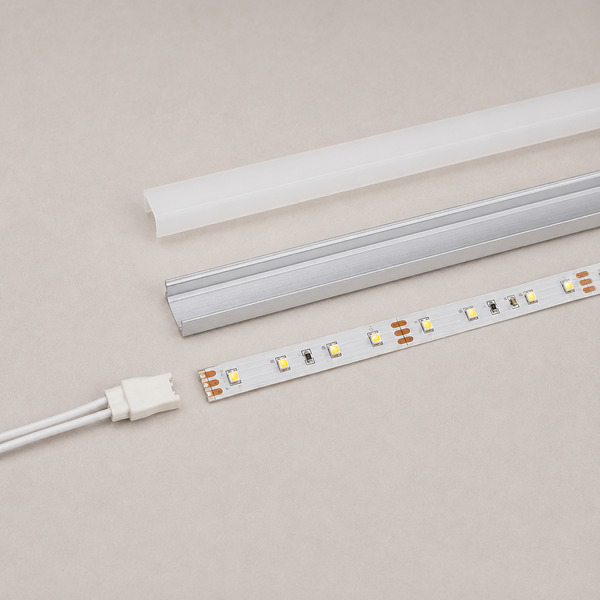
Judge both layouts inside the intended profile and diffuser. Balance source visibility against usable cut positions, connector access, and the required section lengths instead of treating COB or SMD as universally preferable.
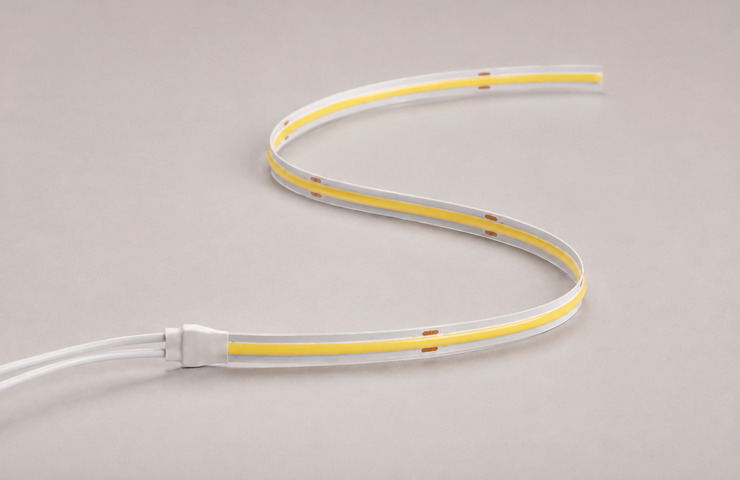
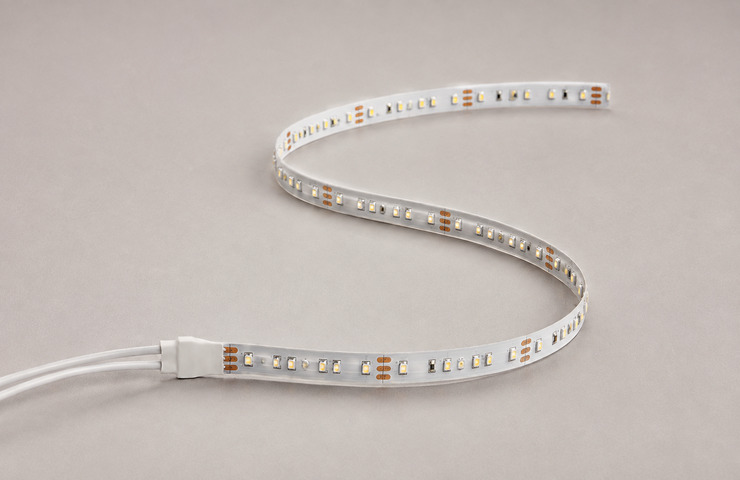
| Decision factor | Continuous-output COB Layout | Discrete SMD Layout | Buyer guidance |
|---|---|---|---|
| Visible line | Favors continuous appearance at shallow optical depth | Source concealment depends strongly on pitch and diffuser distance | Compare source visibility through your actual diffuser at viewing distance. |
| Circuit segmentation | Cut positions follow the chosen continuous circuit | Defined pads support selected section and wiring arrangements | Match every required length to a workable circuit segment. |
| Connection access | Pad and connection method need construction-specific planning | Visible pads can simplify selected harness operations | Include the connector and cable bend when checking end space. |
| Main compromise | Construction-specific cutting and wiring; repairs may require replacing a circuit segment | Shallow diffusers can expose individual LED sources | Choose a construction that permits your intended assembly and repair method. |
| Thermal comparison | Measure the assembly on the intended support | Use the same mounting and operating conditions | Compare temperatures under the same load and mounting conditions. |
Your custom LED strip OEM supplier, VST, links the section layout to the actual wired sample. Electrical and structural engineers document the selected board, connector pinout, and mounting envelope so manufacturing follows the same assembly details.
VST work: Engineering connects required section lengths to feasible segments, feed positions, and the fixed power interface.
Stage output: A circuit layout marking section boundaries, feeds, and connection pads.
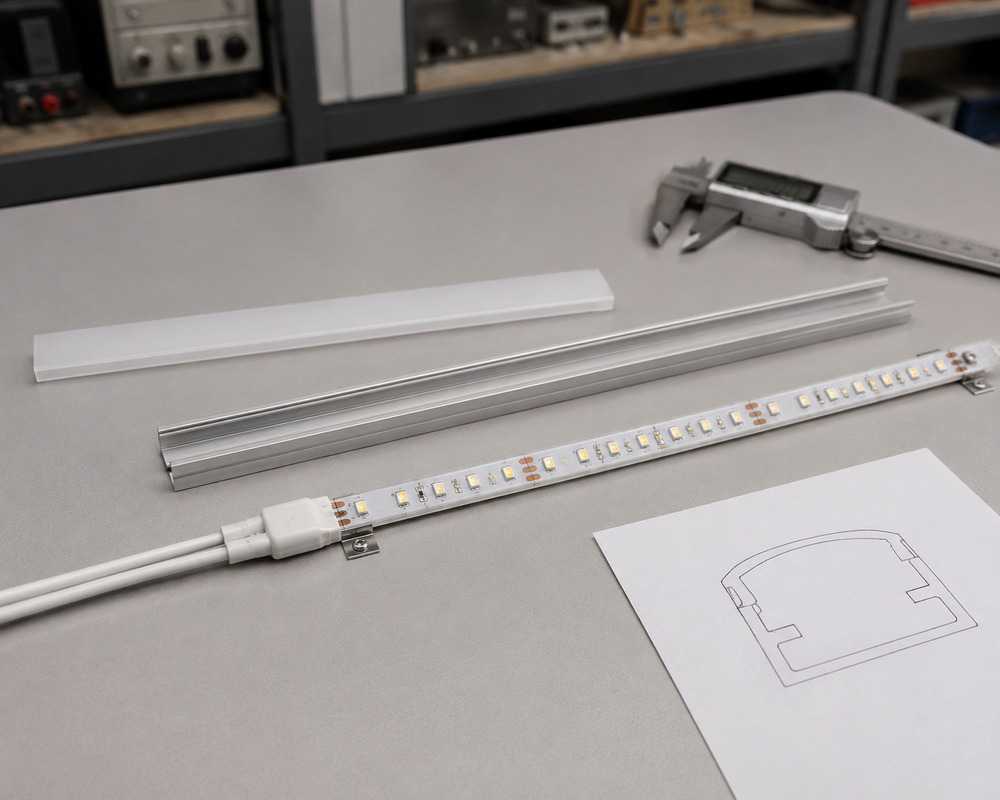
VST work: VST develops the selected source arrangement and connections into representative wired sections for installed evaluation.
Stage output: Wired sample sections with the selected leads and connectors fitted.
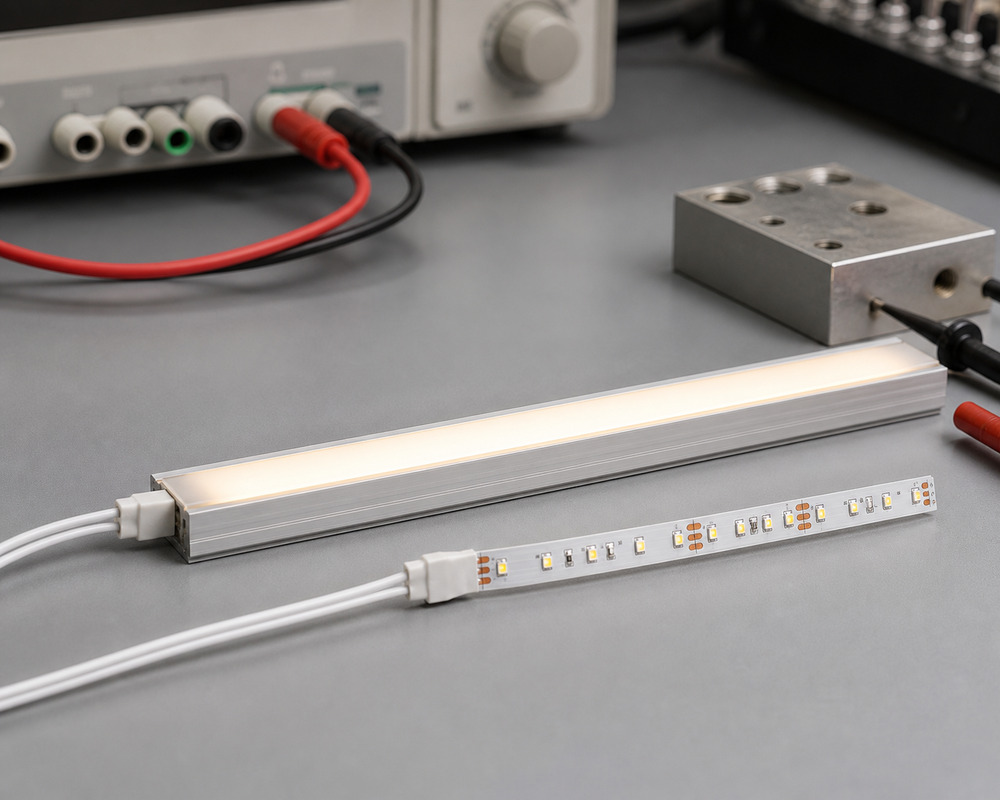
Customer input: The specific fit or lighting deviation.
VST work: The team adjusts the lead route or connector clearance within the selected channel and end space.
Stage output: An updated harness detail showing connector clearance and lead routing.
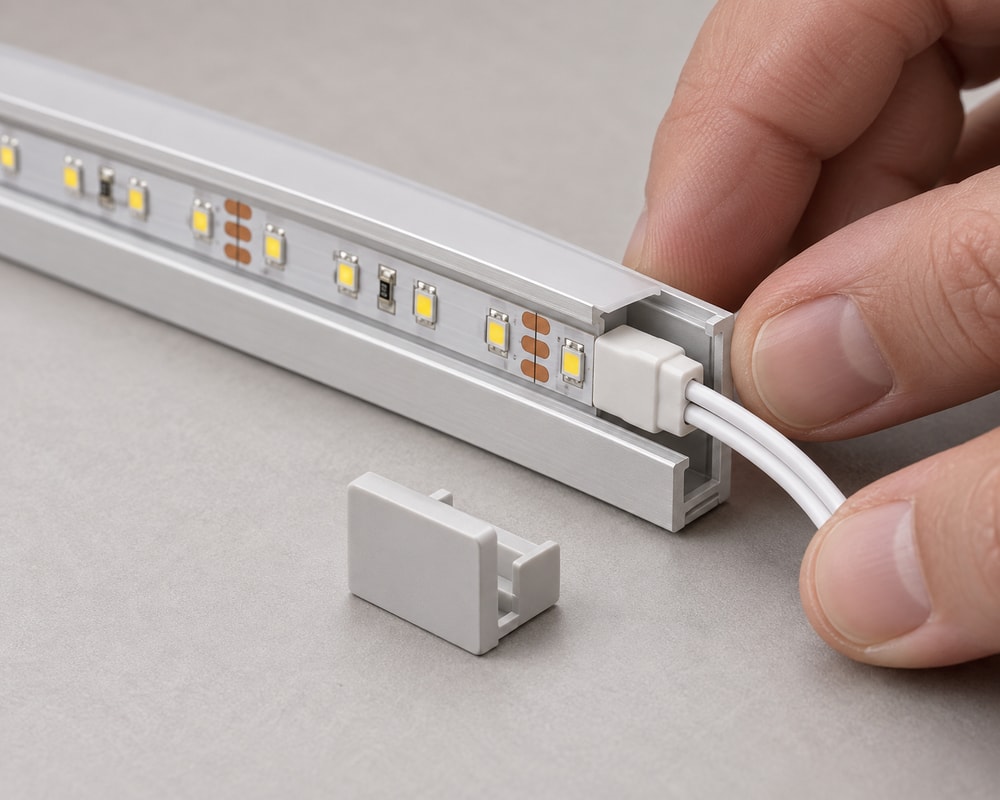
VST work: The board revision, connector pinout, source requirements, and assembly checks are documented for subsequent manufacturing orders.
Stage output: A board and harness specification tied to the selected revision.
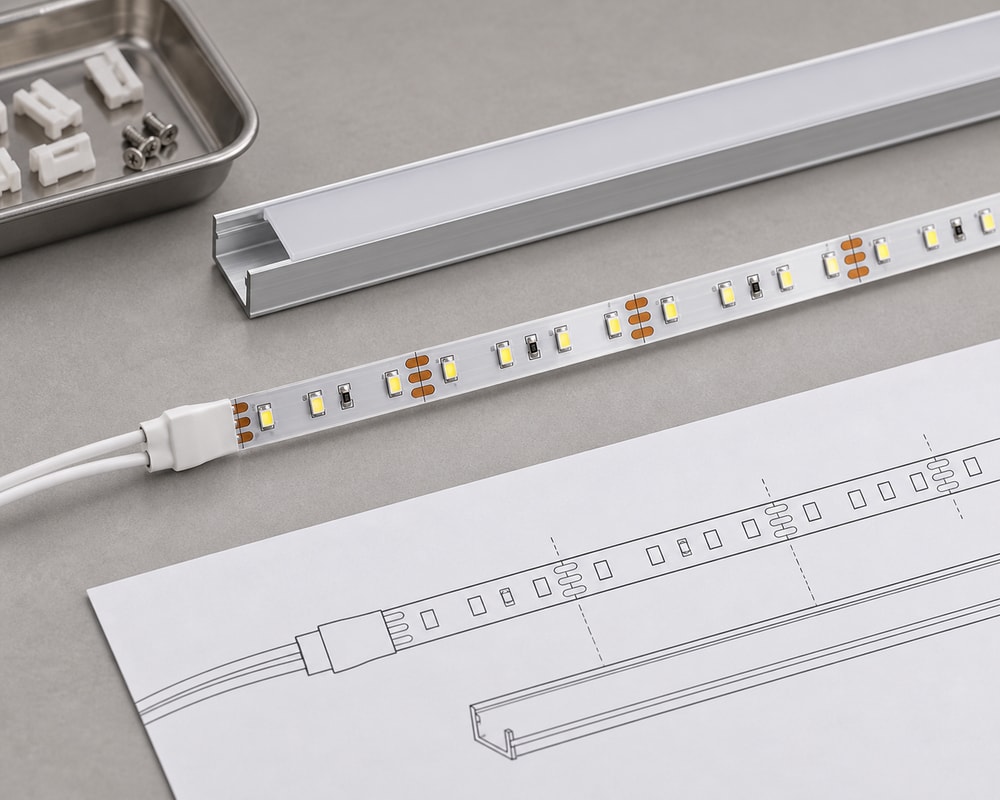
Testing custom LED strip lights in the relevant arrangement exposes differences that a short loose sample may miss. Optical output, installed heat, electrical distribution, and physical connections each require a distinct check.
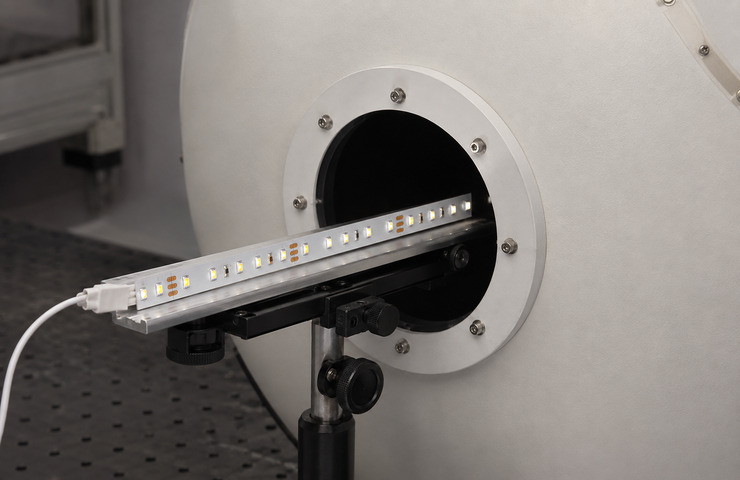
Purpose: Check custom LED strip lights against the defined optical requirements.
Method: Measure the selected sample using an integrating sphere under specified electrical input conditions.
Acceptance criteria: Luminous output and color characteristics for the released construction.
Evidence: Optical records relate to the evaluated sample.
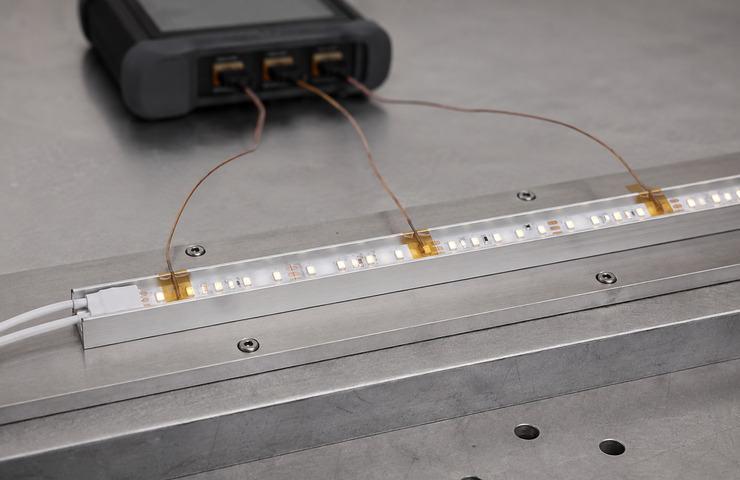
Purpose: Find local heat concentration under representative mounting conditions.
Method: Operate the strip on the intended channel or surface and evaluate relevant temperature locations.
Acceptance criteria: Thermal boundaries for that load, support, and environment.
Evidence: Observations depend on the agreed installation setup.
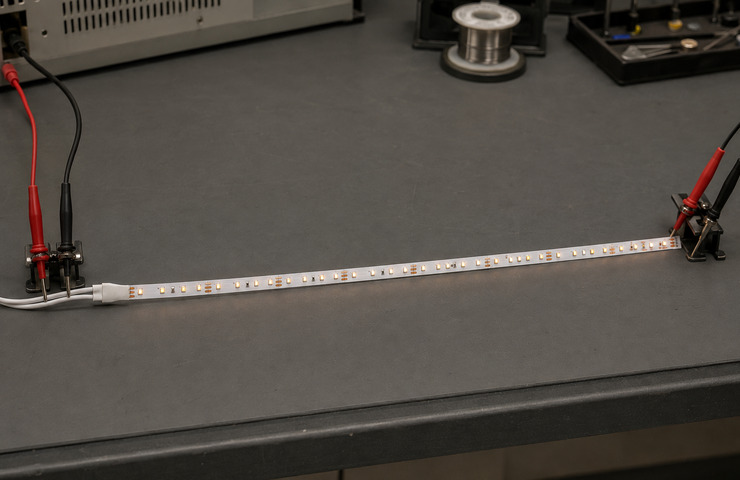
Purpose: Evaluate feed loading, cable losses, and differences along the run.
Method: Power the planned sections through the defined feeds and compare relevant circuit readings.
Acceptance criteria: Electrical behavior against the intended branch and run layout.
Evidence: Recorded readings are specific to that powered arrangement.
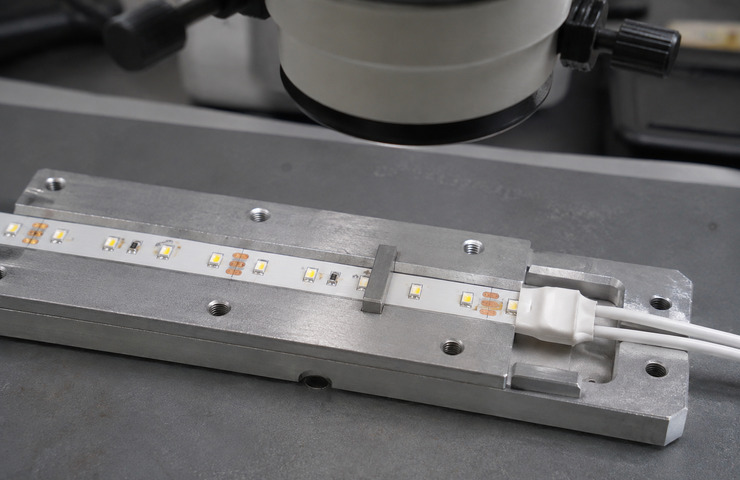
Purpose: Reduce harness interference, polarity errors, and strained lead routing.
Method: Inspect pad placement, section dimensions, connector engagement, and fit within a representative profile.
Acceptance criteria: Board and connection requirements in the assembly definition.
Evidence: Inspection evidence follows the agreed drawing and control points.
Identifies the selected width, segment logic, pad arrangement, and board revision for the order.
Links the intended branches and connectors to their polarity and wiring references.
Associates electrical or thermal observations with the actual mounting and supply arrangement.
For each model, light customization typically begins at 500 units; high customization generally starts at 1,000 units. Existing-platform adaptations differ from substantial PCB, optical, electrical, tooling, or process development. The quotation defines the model, delivery unit, and final quantity for your strip format; do not assume the stated MOQ means metres or reels.
VST provides charged development samples for custom LED strip lights. A new mold, tooling, or dedicated production resource may involve additional expense. A later production order can qualify for repayment or credit of eligible sample costs, according to the amount and method recorded in your project terms. This does not make every sample automatically free.
Light-customization samples normally take 15–25 working days, with bulk production at 20–30. High-customization samples generally require 30–50 working days and bulk production 25–35. Timing begins once necessary technical inputs and applicable fees, deposit, and other order conditions are complete. Stable-demand material preparation can shorten subsequent scheduling, while the actual order plan determines delivery rather than a guaranteed date from these ranges.
New flexible-PCB work, a fixture, mold, profile, or other dedicated resource may create tooling or NRE costs. Where agreed, a later production payment can be reduced by an eligible tooling or mold charge. Project terms specify the qualifying order, credit amount, and application method; not every development expense is fully refundable.
VST maintains the selected PCB revision, light-source requirements, and connection details through supplier coordination and production checks. Working with us as your custom LED strip supplier also supports preparing selected key components against your forecast or reserving them for stable-demand orders. This helps plan replenishment without treating reserved components as ready-to-ship finished strips.
Packaging for custom LED strip lights should protect bend limits, exposed connections, and section identification. Order-specific labels and barcodes can distinguish the assemblies, while carton marks, brand artwork, user manuals, and instruction sheets support your presentation. VST offers customized packaging and shipment coordination; freight costs, packing quantities, and transit times depend on the specific consignment.
Related strip platforms offer construction references, while the selected resources expand on power distribution and integration. Use them alongside the specified custom LED strip lights layout rather than substituting a catalogue item without checking compatibility.
Plan custom LED strip lights for furniture, retail fixtures, architectural details, and equipment integration. As a custom LED strip lights manufacturer, VST connects run…
View detailsIt can remain an open design decision, provided you describe the required lighting behavior and any already-fixed system interfaces. Choosing dimming, color adjustment, or independent zones affects the eventual circuit and wiring. Treat the selected controller and custom LED strip lights as a matched project choice before moving from exploratory layouts to a production assembly.
List each length and connection variant as a separate identifiable item with its quantity. For custom LED strip lights, this prevents a total metre figure from hiding different cutting and wiring operations. The quotation should show which items share a model and which require a separate construction, rather than assuming that all variants use one quantity basis.
Request a defined delivery unit and assembly scope from your custom LED strip light supplier. A reel price and a wired-section price do not describe the same supply.
| Quotation basis | Clarify |
|---|---|
| Delivery unit | Metres, reels, or finished sections |
| Connection work | Included leads and connectors |
| Development scope | Separate applicable charges |
Choose the sample format around the unresolved decision rather than assuming a loose reel proves the complete installation.
| Open decision | Useful sample format |
|---|---|
| Source appearance | Strip with intended diffuser |
| End clearance | Section with actual connector |
| Branch behavior | Relevant powered branch layout |
Keep the changed part identifiable against the selected board and harness specification, then assess the effect relevant to that part. For custom LED strip lights, a similar component description does not establish equivalent color, connection fit, or electrical behavior. The order discussion should identify the change and any necessary comparison before treating it as interchangeable.