
custom tube light
OEM / ODM LED Module Development · Shenzhen, China Custom LED Lighting & Module Development for Global B2B Buyers We develop LED modules, light…
View detailsCustom Lighting for Product Integration
VST is a custom tube light manufacturer developing the illuminated span, diffuser, connections, and mounting around your product. Our sales and technical teams help identify a suitable starting construction and the unresolved fit questions, so you can begin with a clear route toward a sample.
Share your application and approximate length; a sketch or photo is welcome, and undecided details can be discussed.
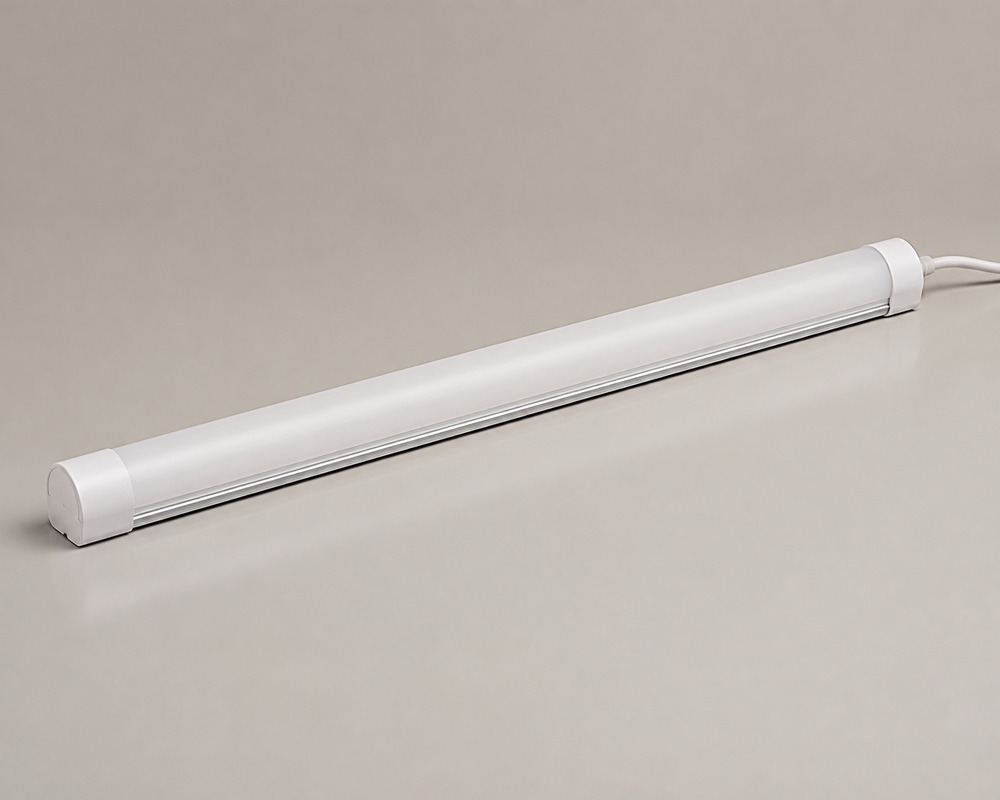
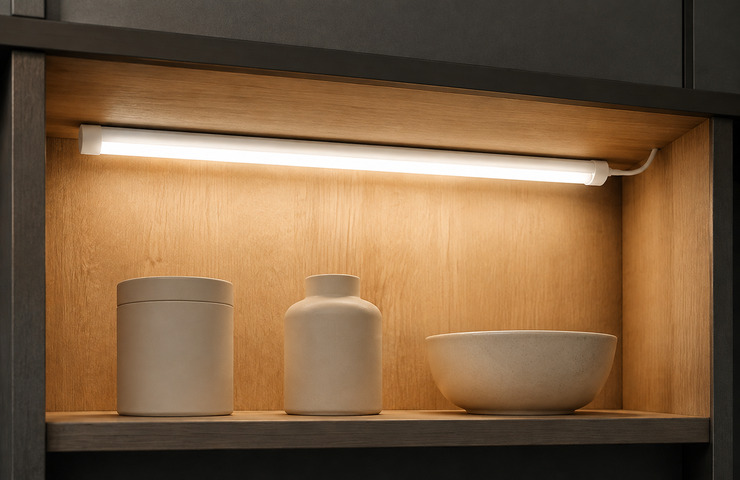
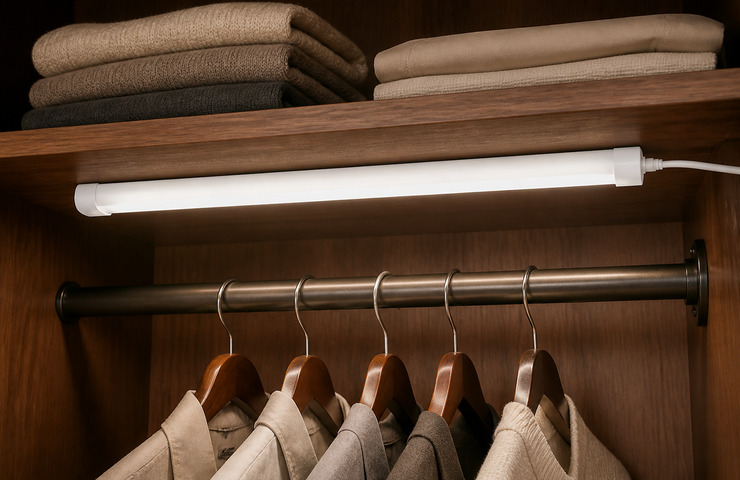
An exposed display edge needs a different light distribution from an enclosed equipment compartment. VST develops custom tube light assemblies around those viewing conditions, surrounding surfaces, and the space needed to remove the fitting.
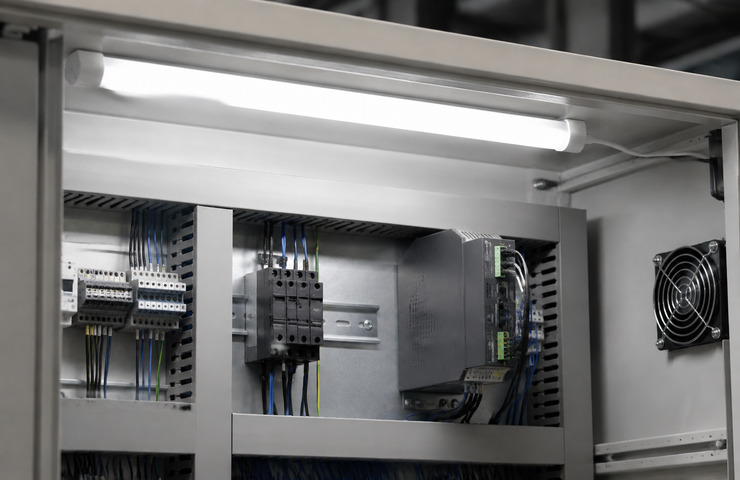
Purchasing risk: A tube can fit externally yet leave a visible dark gap.
VST solution direction: Separate total length, active span, and component keep-outs in the build definition.
Purchasing risk: Local bright streaks can make adjacent furniture sections look inconsistent.
Confirm: Accepted LED-point visibility at the intended distance.
VST solution direction: Control diffuser position and board support rather than compensating with extra brightness.
Purchasing risk: Continuous operation can expose a poor contact path inside the housing.
Confirm: Operating duration and nearby heat-sensitive materials.
VST solution direction: Evaluate the internal carrier and installed support together before fixing the electrical load.
Length, diffusion, connections, and mounting can be customized. Where an existing platform fits, changes can build on it; a new section or optical construction may require dedicated development rather than a simple length adjustment.
Our custom tube light factory adapts length and active span where an existing section is suitable. A new cross-section may need extrusion or end-part tooling; reducing its size also leaves less space for connections and optical mixing.
Buyer input: End keep-outs and critical mating tolerances.
Custom LED tube lighting can use broader wraparound diffusion or a forward-emitting face. Concealing individual LEDs may soften the light but also changes transmission, viewing coverage, and the unlit surface appearance.
Buyer input: Visible sides and preferred unlit finish.
Lead exits, connector placement, board layout, and control interfaces can follow the host system. End access simplifies some connections; side exits can preserve length but demand clearance beside the profile.
Buyer input: Mating connector pinout and permitted exit zone.
Clips, brackets, anti-rotation details, and fixing positions can support different assembly routes. Hidden hardware gives a cleaner appearance, but it must still allow tool access and removal without damaging the furniture or enclosure.
Buyer input: Intended removal route and permitted fixing points.
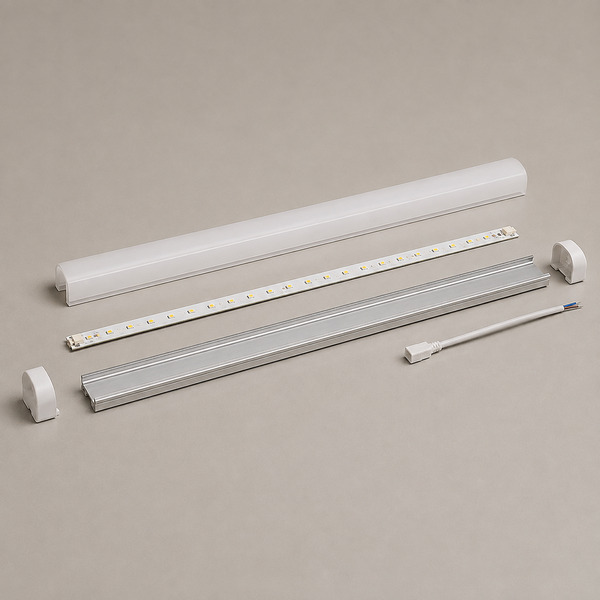
Choose the luminous coverage first: visible from several sides, or directed into one working zone. Then compare the available mounting surface and the space needed to release the tube.
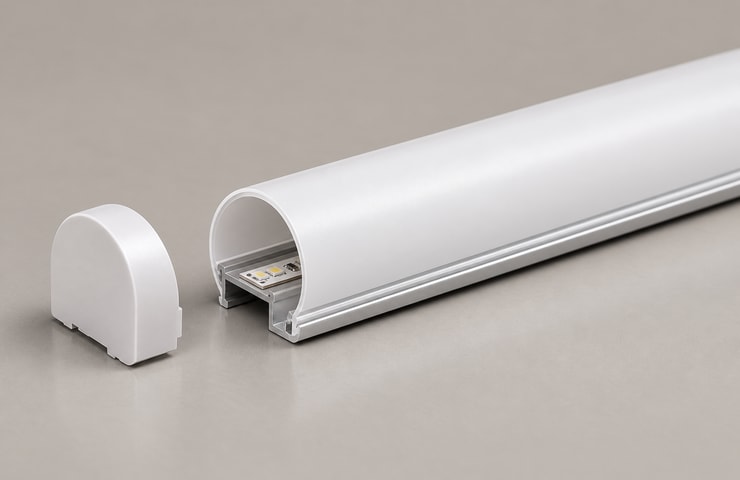
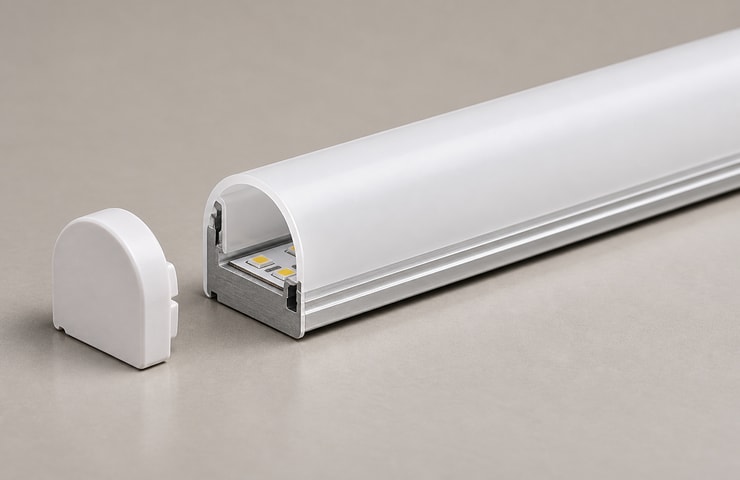
| Decision factor | Wraparound Diffused Tube | Directional Backed Tube | Buyer guidance |
|---|---|---|---|
| Best-fit location | Exposed feature visible from several directions | Concealed cabinet or equipment task lighting | Choose wraparound diffusion when the fitting remains visible from several sides. |
| Luminous coverage | Diffuser surrounds most of the visible section | Forward face directs light toward one zone | Use a backed face when light must stay within one zone. |
| Internal organization | Carrier supports components behind the diffuser | Opaque rear provides a defined support area | Reserve enough carrier space for the chosen wiring and support. |
| Main compromise | Less concealed area for heat transfer and wiring | Visible rear and narrower luminous coverage | Balance visible coverage against the available concealed heat-transfer surface. |
| Replacement access | Retention must preserve the multi-sided appearance | Rear fixing can simplify orientation and removal | Check removal access before hiding the fixing behind finished surfaces. |
At VST, your custom tube light OEM supplier, structural and electrical engineers work from the same installation section. The development scope connects a dimensioned layout, an assembled sample, and the selected component details needed for production.
VST work: VST locates the illuminated zone, component space, and end interfaces within the available section.
Stage output: A layout identifying total length, lighted span, and end clearances.
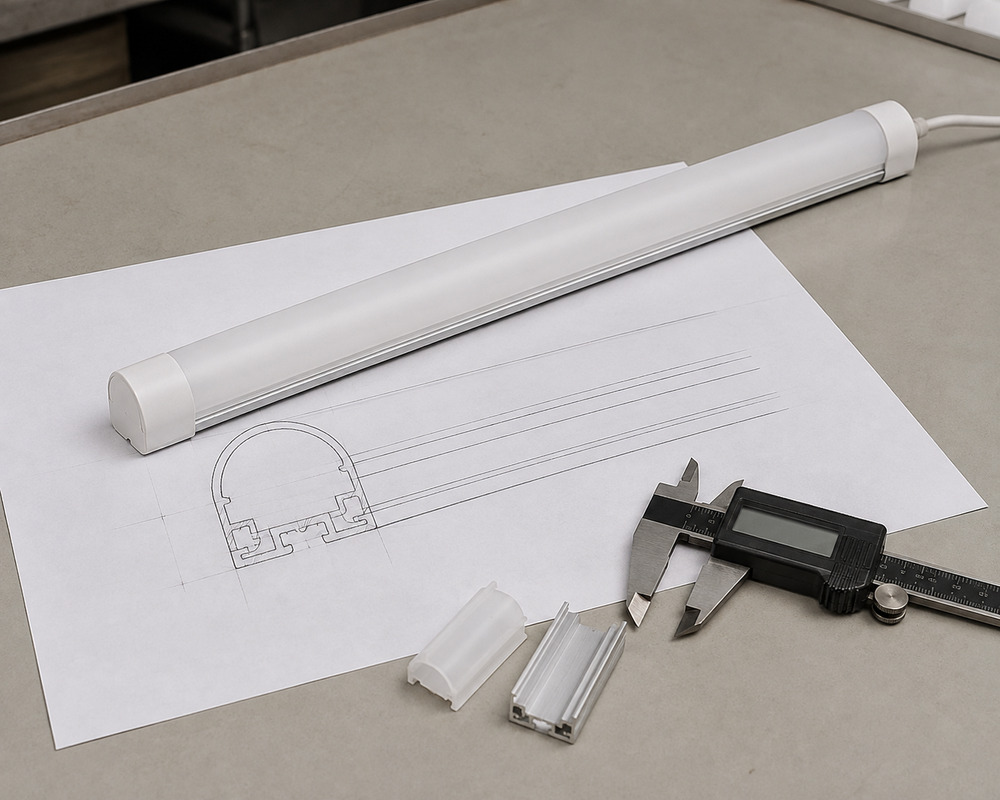
VST work: The proposed carrier, diffuser, and connection are assembled into a representative custom LED tube light.
Stage output: A tube sample fitted with the selected diffuser and ends.
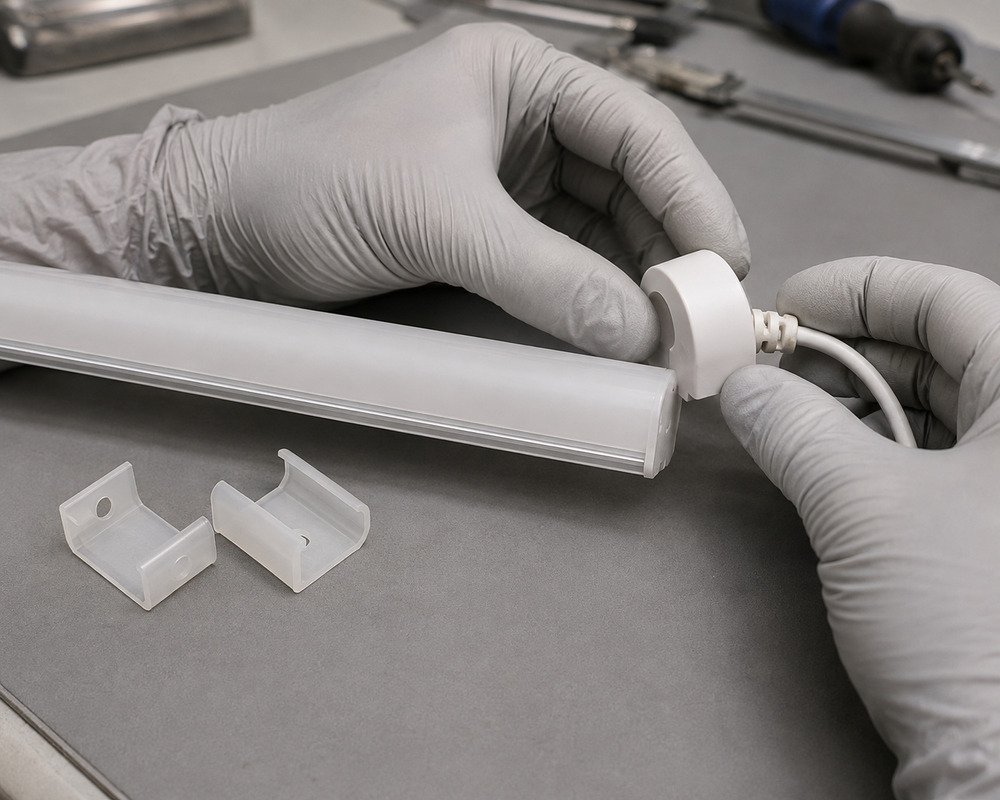
Customer input: Specific mismatch observed in the host assembly.
VST work: Engineering adjusts the identified clip or end interference and records the change against the sample.
Stage output: A revised mounting detail with the corrected clearance recorded.
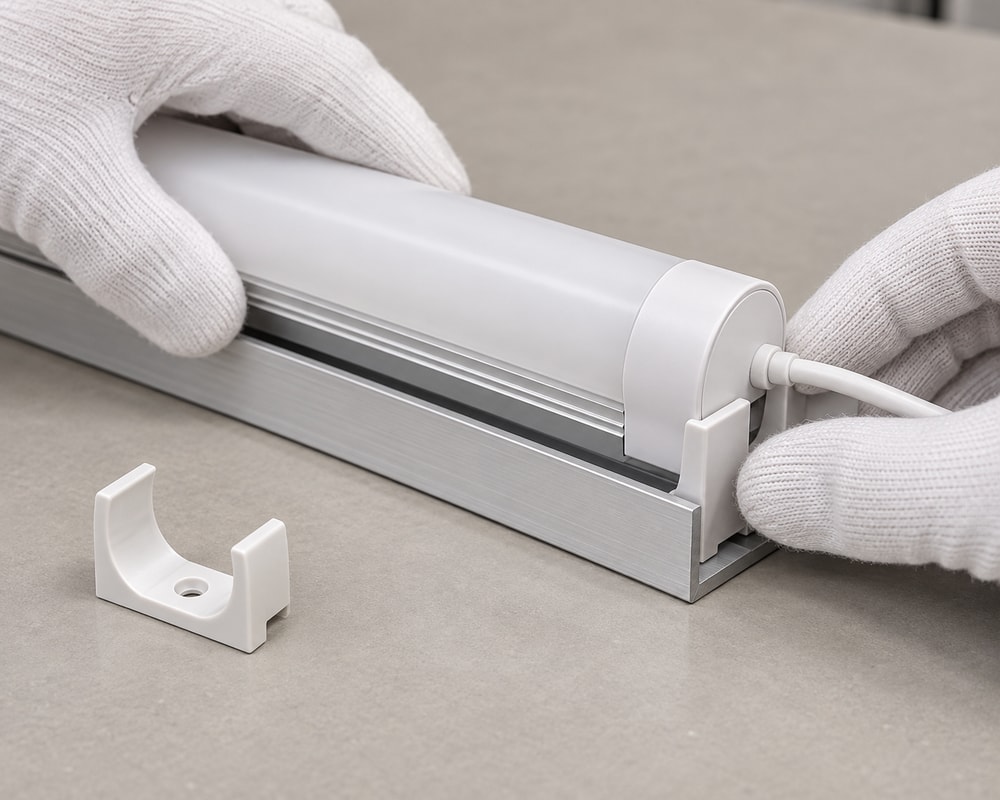
VST work: The team documents selected tube parts, connection details, and inspection points for manufacturing and subsequent supply.
Stage output: An assembly specification identifying parts, connections, and inspection points.
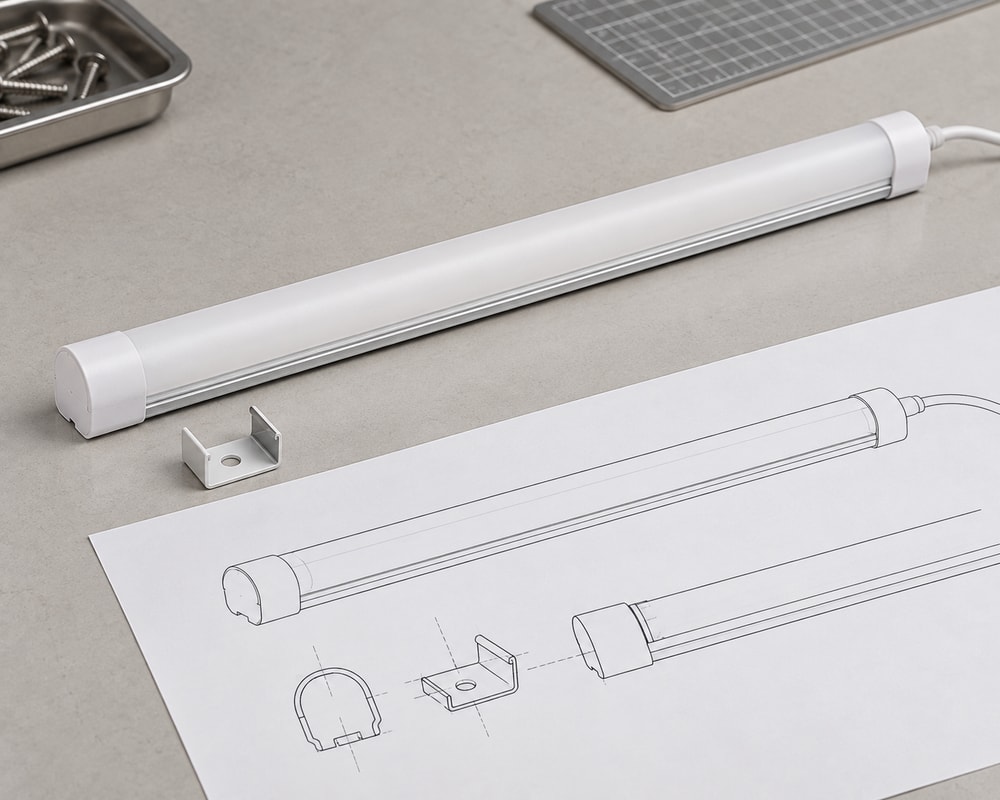
A custom tube light should be evaluated as an assembly, including its ends, diffuser, supports, and connection. These four checks cover distinct risks; the agreed test scope determines which records accompany the project.
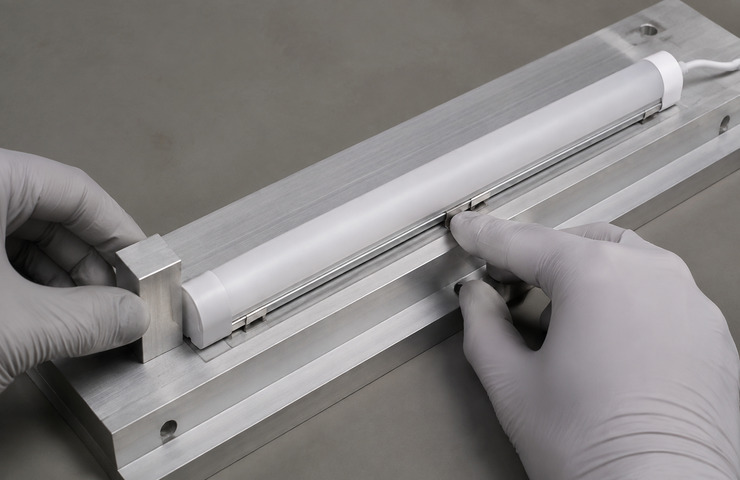
Purpose: Find interference before the tube enters the host assembly.
Method: Measure critical sections and try the light against mating parts or a representative fixture.
Acceptance criteria: Clearances and fixing positions against the defined drawing.
Evidence: A fit record is project-specific.
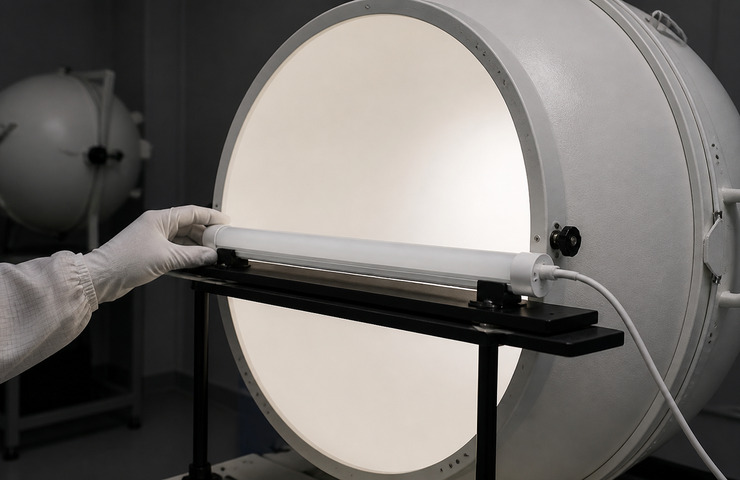
Purpose: Evaluate the custom tube light against its optical targets.
Method: Use integrating-sphere measurements on the selected assembly at the specified operating input.
Acceptance criteria: Output, CCT, and color criteria in the project specification.
Evidence: Measured data depends on the agreed sample scope.
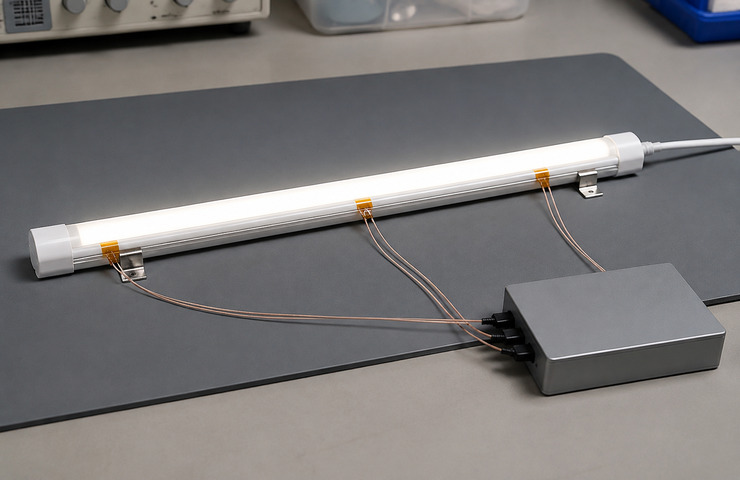
Purpose: Identify excessive temperature at the carrier, profile, or adjacent materials.
Method: Operate the assembly on its intended support and evaluate the relevant thermal points.
Acceptance criteria: Component and material limits under the defined installation conditions.
Evidence: Thermal records relate to that tested arrangement.
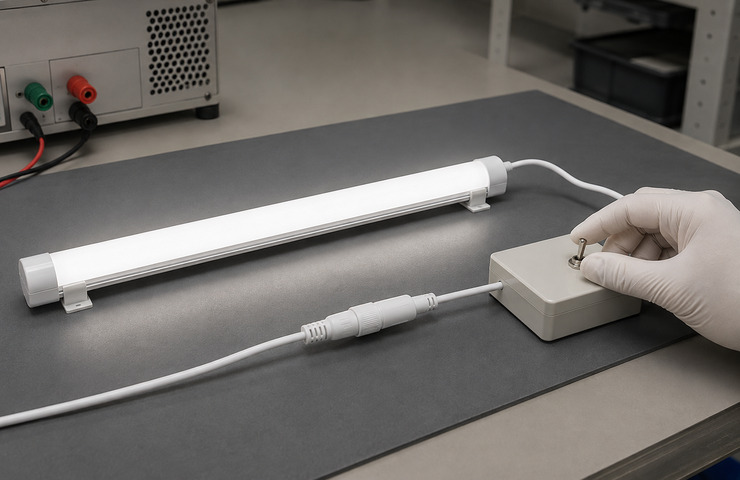
Purpose: Detect reversed polarity, unstable illumination, or an incorrect control response.
Method: Operate the sample through its defined interface and inspect connection and switching behavior.
Acceptance criteria: Electrical and functional requirements for the selected system.
Evidence: Test results are supplied only within the agreed scope.
Records the chosen section, illuminated span, end details, and inspection points for the defined build.
Identifies the cable exit and mating interface so assembly teams use the same electrical reference.
Connects fit, optical, or thermal observations to the evaluated custom tube light configuration.
For a single model, the usual starting MOQ is 500 units for light customization or 1,000 for high customization. Adapting an existing tube platform is light work; a substantial change to the section, optical construction, PCB, or production method may require high customization. Your quotation sets the final quantity for that scope.
VST supports sample development for a custom tube light. Processing charges apply, with possible tooling or mold costs when new resources are needed. Eligible sample expenditure can be returned or credited against a later production order; the applicable amount, qualifying order, and method are agreed for the project and recorded in the commercial terms.
Typical light-customization timing is 15–25 working days for samples and 20–30 for bulk production. High customization normally takes 30–50 working days for samples and 25–35 for bulk. These ranges start after necessary technical information and applicable fees, deposit, and order conditions are complete. Preparing agreed key materials for stable demand can shorten later scheduling; these are normal ranges, not guaranteed delivery dates.
A new extrusion die, end-cap mold, checking fixture, or other dedicated resource can create a tooling or NRE charge. Eligible tooling or mold charges may be credited against payment for a later production order. The qualifying order, amount, and credit method are discussed and written into the terms; full reimbursement is not automatic.
For repeat orders, VST uses the selected profile, diffuser, end parts, and connection as the production baseline. As your custom tube light supplier, we coordinate component sourcing against those details. Stable demand supports forecast-based preparation or reservation of agreed key materials for steadier supply. The arrangement covers materials rather than guaranteed finished-goods inventory.
For slender tubes, end support, separators, and surface protection help protect straightness and finish. Product packaging, labels, carton marks, barcodes, brand artwork, instruction sheets, and user manuals can be customized to the order. VST also coordinates shipment arrangements; packing quantities, freight terms, and transit timing depend on the actual consignment.
Use the selected linear-lighting examples for installation context and the technical resources for deeper design questions. A linked product is a reference, not an automatic match for your custom tube light.
OEM / ODM LED Module Development · Shenzhen, China Custom LED Lighting & Module Development for Global B2B Buyers We develop LED modules, light…
View details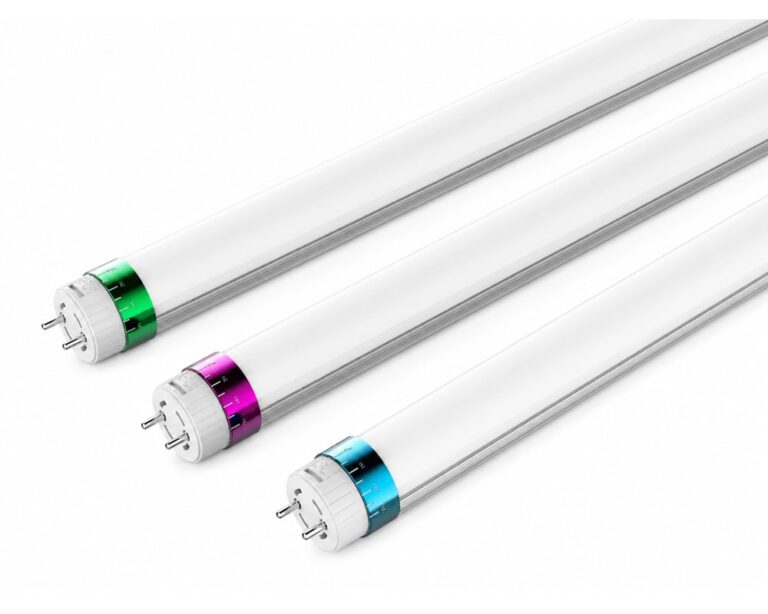
Develop a custom tube light around the mechanical, optical, and electrical limits of equipment, display furniture, refrigerated cases, or specialist products. As a custom…
View details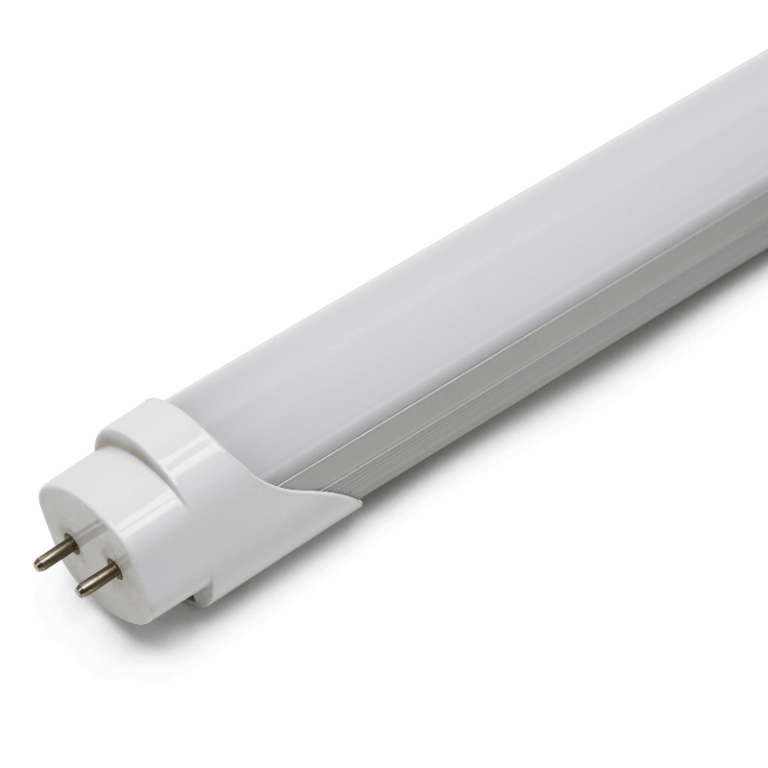
Compact 450mm 7W T8 LED tube light for cabinets, display fixtures, equipment integration, and tight commercial retrofit spaces. It offers 150lm/W efficiency, AC85V-265V input,…
View details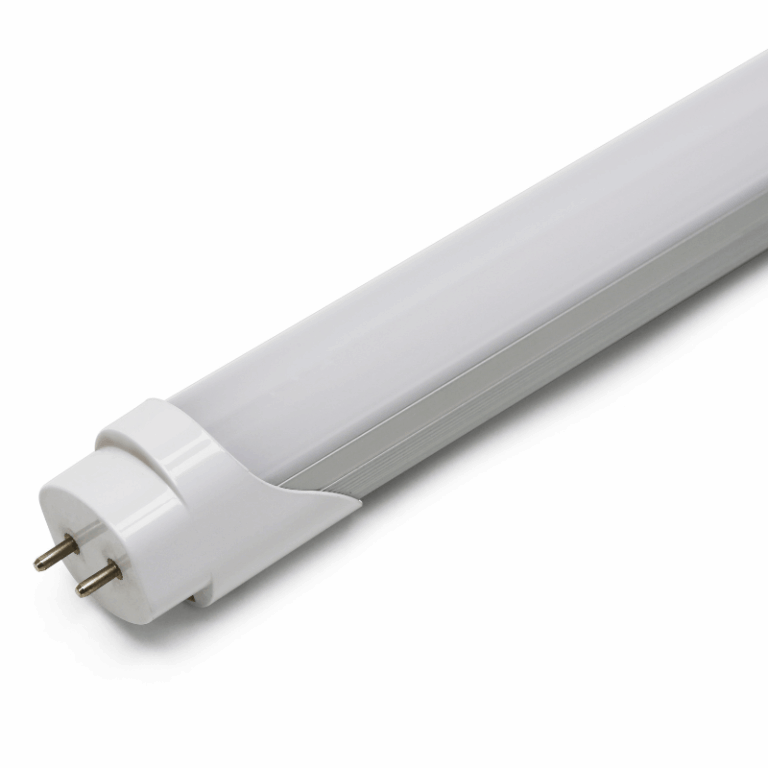
970mm 15W T8 LED tube for custom retrofit and OEM integration where exact fixture length matters. The model supports 150lm/W efficiency, 50,000hrs lifespan target,…
View details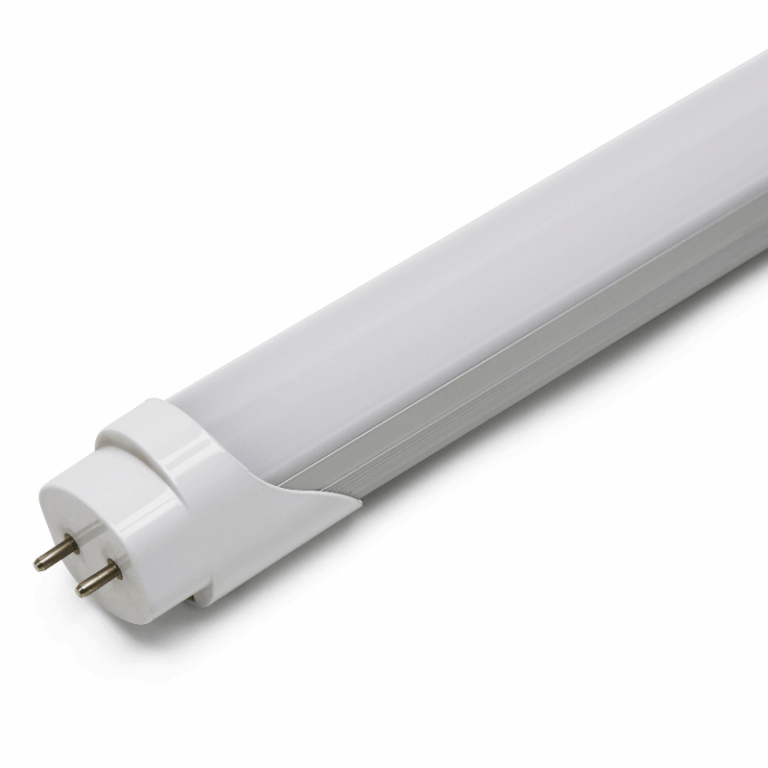
600mm 10W T8 LED tube for office, corridor, school, and compact commercial retrofit projects. With 150lm/W efficiency, 50,000hrs lifespan target, AC85V-265V input, >0.92 power…
View details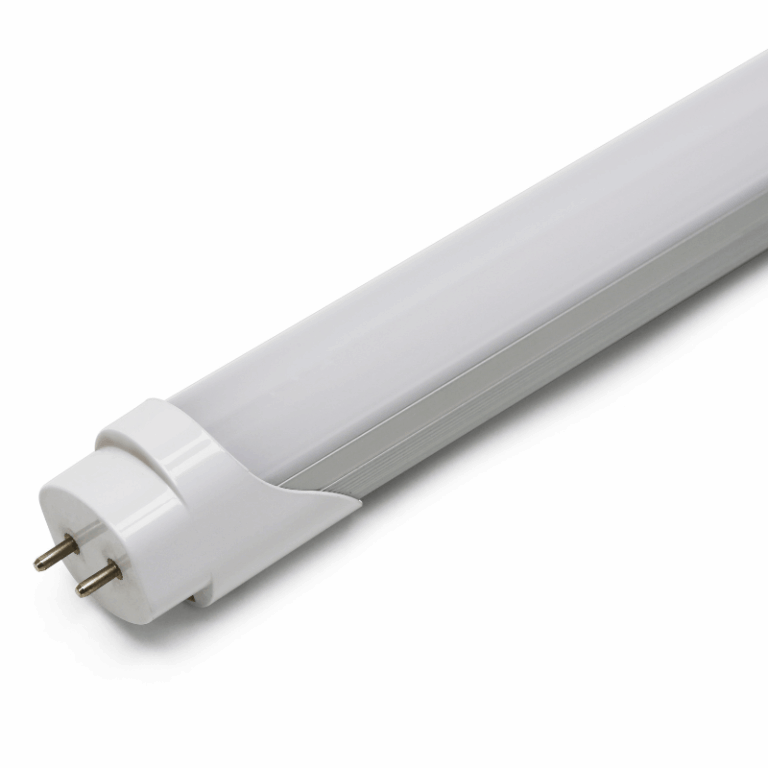
900mm 14W T8 LED tube light for retail display, corridor, service counter, and non-standard fixture replacement projects. It combines 150lm/W efficiency, 160° beam angle,…
View detailsSeparate dimensions already fixed by the host product from dimensions that can still change. VST can develop the custom tube light proposal around that distinction rather than treating an early sketch as a finished drawing. Keep the open boundaries visible in the discussion so later housing changes do not unexpectedly alter the selected tube section.
It can when the mounting interfaces, electrical requirements, and intended light effect remain compatible. A common custom tube light may simplify your product range, but a shared outside shape alone is not enough. Where versions differ, identify the fixed interfaces first so the proposal separates a common assembly from any version-specific parts.
Ask your custom tube light supplier to identify the complete assembly rather than pricing an undefined tube. A clear supply boundary makes alternatives easier to compare.
| Quoted item | Scope to identify |
|---|---|
| Light assembly | Profile, board, and diffuser |
| Connections | End fittings and leads |
| Installation parts | Included clips or brackets |
Only where the conditions relevant to its performance are comparable. The same custom tube light may sit behind a reflective shelf in one location and inside an enclosed compartment in another. Select a representative installation for the sample and identify materially different locations before relying on its appearance or temperature behavior across the whole project.
Recheck the interface affected by the change rather than restarting every part of development. Keep the original sample and the revised host detail linked.
| Changed host detail | Check affected |
|---|---|
| Hinge or door path | Movement past the tube |
| Clip seat | Retention and release access |
| Cable opening | Lead routing and end clearance |